Since 2023, the Tabletop Game Alliance of Washington State (TGA) has been hosting an annual Tabletop Game Summit in Olympia, WA. This year, the TGA has expanded the summit into a full day of seminars, panels, and networking events and titled the event the Future of Games. We are welcoming all tabletop professionals of Washington State including retailers, artists, publishers, designers, students, educators, and more to connect with others in this industry and share their expertise.
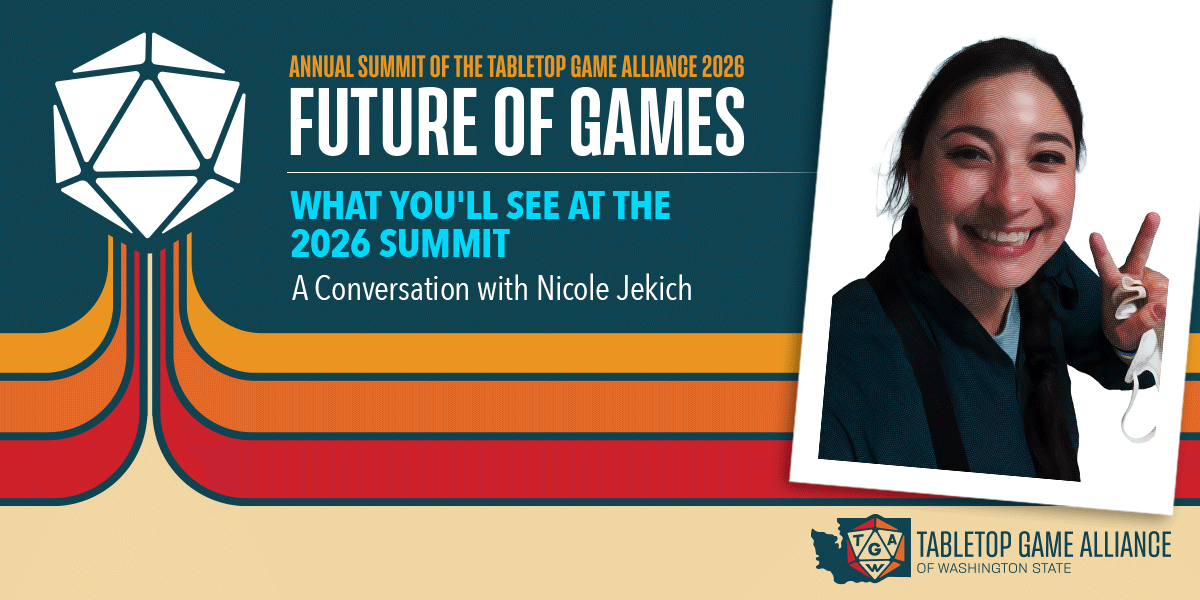
Heading up the effort to develop, organize, and coordinate summit programming this year is Nicole Jekich: a game industry project manager and member of the TGA. We sat down with Nicole to introduce herself and to get into the details of the Future of Games programming.
TGA: Could you introduce yourself and share what role you play with the TGA?
NJ: I’m Nicole Jekich and I’ve been working in the tabletop industry for 10 years now. I started in this industry by organizing playtesting events under PlaytestNW and then worked my way up to becoming a game industry professional. Currently, I’m a project manager at Ravensburger Games. I joined the TGA as an ad hoc volunteer and have hosted an industry night in Bellevue, joined a trade mission to Japan, and plan the event programming for the next couple of years. I have a number of relationships and connections through my years of being in the industry and enjoy bringing collective work and knowledge sharing across the tabletop industry.
TGA: How did you get involved in coordinating the programming content for the FOG summit?
NJ: I’ve always enjoyed watching the process of game development from a new designer who has a really rough prototype or is just getting started to publishing their game. There are so many different ways that I’ve seen designers make their games and it’s wonderful to see it from start to finish. My hope for the programming, and a lot of what we are doing at the TGA, is to foster growth, share knowledge, and offer resources to those just starting their journey into making a game.
Our goal is to offer helpful content so new designers can more easily go through that same process of making their game from start to finish by learning from those who’ve already gone through that experience.
There’s another side to the programming this year focused on the business side of the game industry and professionals working within tabletop game companies. Established businesses owe their success to their trial and error and learning from other businesses that came before them. We aim to offer seminars where business owners can deep dive into more detailed specific business topics with peers. And for professionals, we’re offering a chance to connect with others in their similar role and learn about other behind the scenes roles in tabletop that are not commonly known, but are critical to ensuring games get to the shelf.
TGA: What is different about this year compared to last?
NJ: The FOG summit is going to be the first time where we have more formalized content and open it up to the public. People who are in the game industry who are not yet members of the TGA can participate and learn more about the organization, but also benefit from that kind of collaboration and connection through these events that TGA likes to host.
In previous years, we had our annual membership meeting and then we would have some breakout round tables. Those roundtables brought in representatives from game retailers or publishers so we could talk about what the future looks like, what challenges they were experiencing, and how the TGA as an organization might be able to offer support.
This year, the Future of Games summit is much bigger in scope and aims to bring a 100 or so attendees including current TGA members and other Washington State tabletop professionals, together for a larger industry-focused gathering. We welcome attendees including students, non-profits, and hobbyists too. Students may be exploring different pathways into gaming careers or maybe have games themselves that they’re working on for school or for fun. Over the years, some of the best game designers and organizers growing communities through games are educators, non-profit groups, and hobbyists building playtesting communities so we want their voice and experience in these tabletop industry conversations too.
TGA: What programming are you hoping for?
NJ: For this year’s programming, we approached our TGA advisory boards to see what topics they wanted to discuss based on their area of expertise and to ensure different tabletop categories (creatives, publishing, retailers, etc) are included in the programming content. There will be a large room for panels focused on the process of game making from start to finish. There will also be two smaller rooms for seminars with business and professional centric topics led by a facilitator.
One seminar room will be focused on the business side of tabletop games including publishers getting into the nitty-gritty of business topics. I’m actually really excited for this because we don’t tend to get a lot of business conversations at game conventions. For those attendees who may be just starting out as an artist, a freelancer or entrepreneurs perhaps in the first year of forming their own business, they can hear from industry veterans and learn how they’ve been able to maintain successful businesses for decades.
The second seminar room is going to be focused on the behind the scenes tabletop infrastructure. This includes discussion between tabletop professionals in roles that are not commonly known like project management and production. We’ll also have a convention organizer and retail seminar about how those businesses create community and build long-term success.
TGA: Last question – What is your current favorite game?
Cat and the Tower — it’s a cooperative dexterity game from Japan that was released in the US at this past GenCon and published by Arclight Games. There is storytelling involved where you will move wooden meeple cats up an ever-growing tower of folder paper pillars and platforms. It’s a challenging game but you end up with a wonderful story to tell and a precarious tower at the end!